
Understand movement.
Change patterns.

The Alexander Technique is an educational method that helps you become more aware of habitual patterns in movement, posture, and muscular tension, and discover new ways of using your body.

Awareness Movement Posture

What is the Alexander Technique?

The Alexander Technique is a learning method that helps you become more aware of your movement, posture, and tension habits and discover new ways of using and experiencing your body.

Notice Patterns

Many of our movements and reactions happen automatically. During lessons, you learn to become more aware of these movement and tension patterns and better understand when and how they appear in everyday life.

Move with Awareness

Between a habitual reaction and your next movement, there can be space to explore and try different possibilities. The goal is not to adopt one specific “correct” posture.

Explore New Possibilities

Sitting, standing, walking, and other everyday movements can be experienced with greater awareness. The aim is to better understand your own habits and discover new possibilities in the way you move.

Who is the
Alexander Technique for?

The Alexander Technique can be valuable in many different areas of life and work. In my teaching, I focus especially on these three groups.

Performers & Artists

For singers, musicians, actors, and dancers whose work relies on voice, movement, presence, and body awareness. The Alexander Technique offers a way to become more aware of personal habits and explore new possibilities in movement and expression.

Learn more

Work & Office Life

For people who spend long hours sitting, work at a screen, or perform the same movements repeatedly. Lessons can help you become more aware of habitual movement and tension patterns and explore new ways of approaching everyday situations.

Learn more

Health-Conscious Individuals

For professionals in fields such as physical therapy, yoga, and chiropractic care, as well as anyone who wants to explore movement and body awareness more deeply. The Alexander Technique offers an additional perspective on personal movement and tension habits.

Learn more

What happens during a lesson?

Every lesson is individual and usually lasts about 45 to 50 minutes. Together, we look at how you move, which habits may be influencing that movement, and what new possibilities you can explore.

1

Define your focus

At the beginning, we look together at what you would like to focus on during the lesson and which movements or habits feel especially relevant at that moment.

2

Sitting, standing, and moving

We often work with simple everyday movements, such as sitting, standing up, standing, or walking, often using a chair as a practical starting point.

3

Notice and explore

Through verbal guidance and gentle hands-on guidance, I help you become more aware of familiar movement and tension patterns and explore new possibilities.

4

Release unnecessary tension

Part of the lesson may also take place lying on your back. This creates space to notice unnecessary patterns of tension more clearly and gradually begin to let them go.
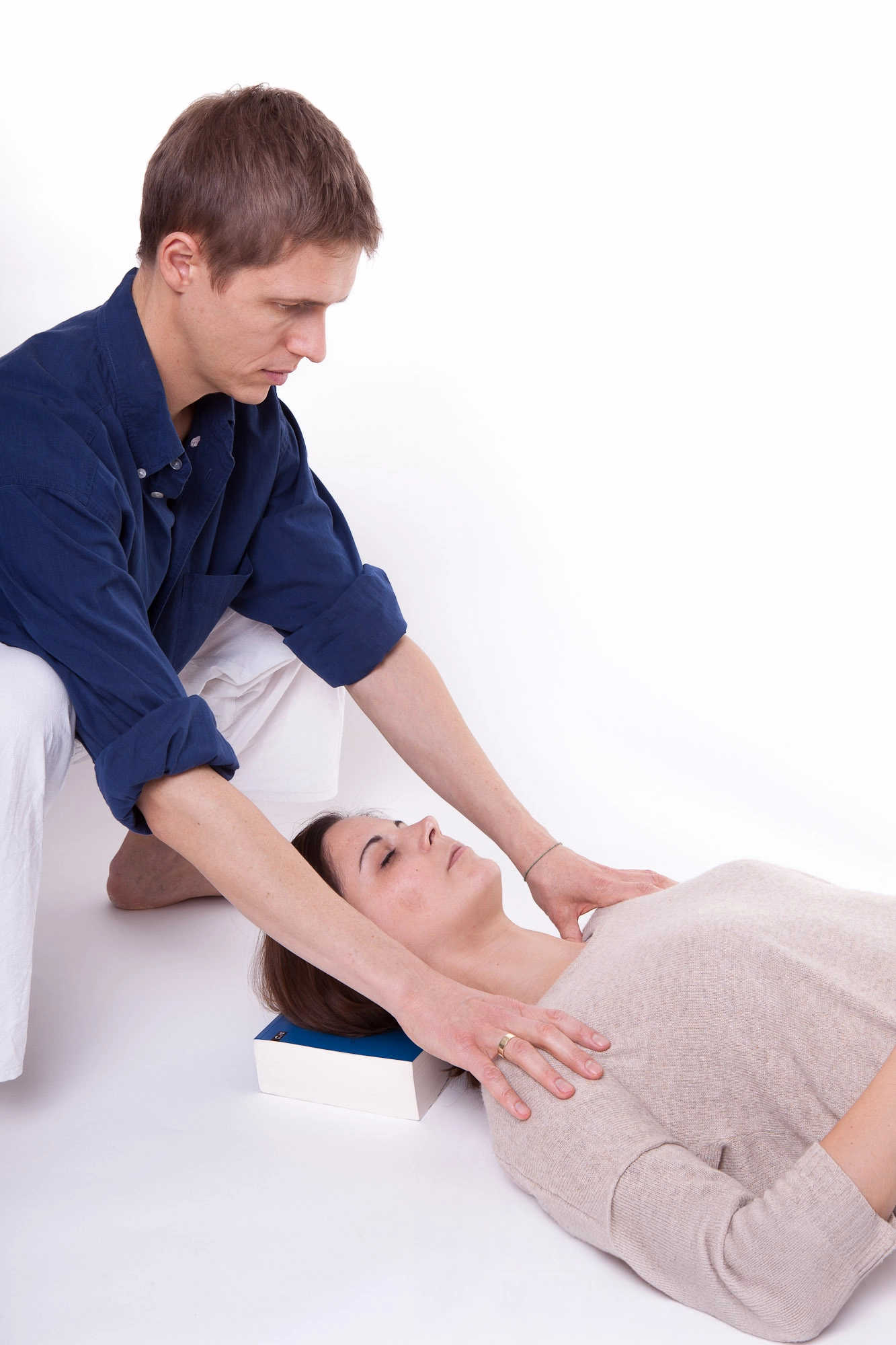
Alexander Technique lesson while lying on the back

Lessons & Pricing

Each lesson lasts approximately 50 minutes. You can book individual lessons or choose a package of 10 sessions.

Single Lesson

approx. 50 minutes

€45

10-Lesson Package

10 lessons

€400
Up to €100 in funding through the SVS Health Bonus for people insured with SVS

What the research shows

The Alexander Technique has also been studied scientifically. A randomized clinical trial conducted by the Universities of Southampton and Bristol examined its effects on people with chronic or recurrent low back pain.

579

people took part in the clinical trial.

21 → 3

days in pain over a four-week period after 24 Alexander Technique lessons, compared with the control group.

42%

reduction in activity limitations caused by back pain after one year.

Experiences from Workshops

The Alexander Technique has also been used in workshops with blind and visually impaired teenagers and young adults. Three participants share their personal experiences.

Willy, age 20

Jürgen, age 18

Corinna, age 15

Frequently Asked Questions

Here you’ll find answers to common questions about the method, the lessons, and what you can learn from them.

What is the Alexander Technique?

The Alexander Technique is a learning method that helps you become more aware of unhelpful habits in posture and movement, understand them, and gradually learn new ways of responding.

What can I learn through the Alexander Technique?

You learn to recognize familiar patterns of posture, movement, and tension more clearly. This can help you notice unnecessary tension and explore new possibilities for movement and coordination.

What happens during a lesson?

Lessons combine verbal guidance with gentle hands-on guidance. The work often begins with simple movements such as sitting, standing up, and standing. Part of the lesson may also take place while lying comfortably on your back.

Is the Alexander Technique a therapy or massage?

No. The Alexander Technique is a learning method, not a therapy or massage. It also does not involve medication or medical treatment.

Can I use what I learn in everyday life?

Yes. An important part of the learning process is becoming increasingly able to recognize your own habits and apply what you have learned to everyday movements outside of lessons.

What does research say about chronic back pain?

A study published in the British Medical Journal by researchers from the Universities of Bristol and Southampton examined the Alexander Technique in people with chronic or recurring back pain. In particular, 24 individual lessons were associated with positive results in both days of pain and limitations in everyday activities, even one year later.

View the original study in the British Medical Journal

Curious to experience
it for yourself?

If you'd like to experience the Alexander Technique for yourself, I'd be happy to hear from you. We can talk about what you're currently working with and what lessons could look like for you.