
Move with
awareness.
Find greater
ease.
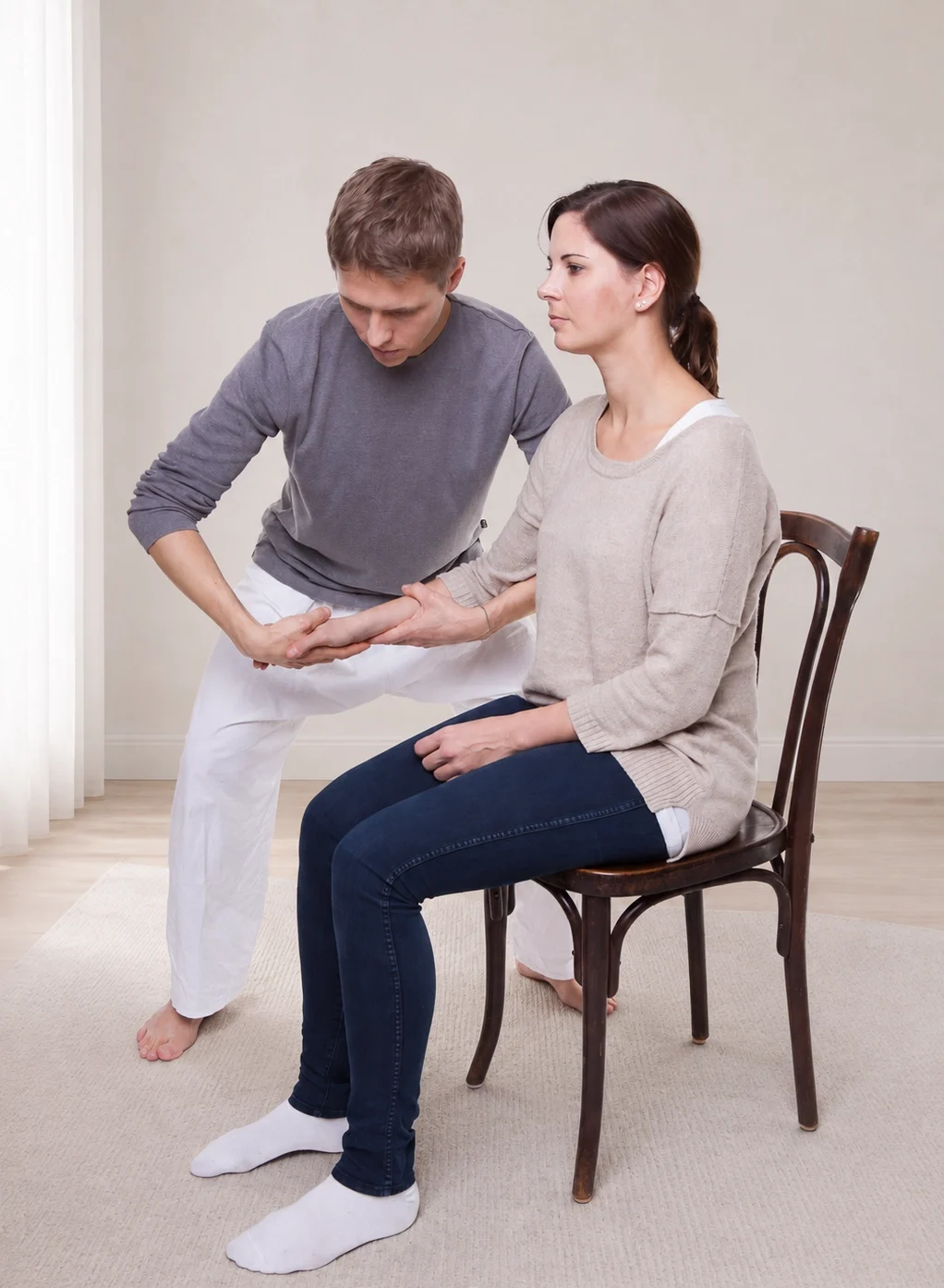
The Alexander Technique is an educational method that helps you become more aware of habitual patterns in movement, posture, and muscular tension, and gradually explore new ways of moving.
Does this sound familiar?
Many movement, posture, and tension patterns happen automatically. We often notice them only when movement starts to feel stiff or effortful. The Alexander Technique invites you to become more aware of these habits and explore new possibilities in everyday life, at work, and on stage.
Tension after sitting for long periods
After sitting for long periods, your neck, shoulders, or back may feel tense, heavy, or easily fatigued, and movement can feel less free.
More tension under pressure
Stress can subtly change the way you stand, breathe, and move, often without you noticing. This can create additional tension.
Movement feels stiff or restricted
Some movements can feel unnecessarily effortful or restricted, without it being immediately clear which habits are contributing.
Tension while performing
When singing, acting, or performing, tension and ingrained movement patterns can affect your presence, breathing, and sense of ease.
Alexander Technique
for everyday life
Move with greater awareness and recognize unnecessary tension sooner.
Much of what we do while sitting, standing, or moving happens automatically. With the Alexander Technique, you learn to become more aware of these habits and notice unnecessary tension sooner.
This can help you discover new ways of moving with less effort and greater ease. It is not about achieving a prescribed “correct posture,” but about developing more choice in how you move.
Who is the
Alexander Technique for?
The Alexander Technique can be valuable for many different people. In my work, I focus especially on these three areas.
Performers & Artists
For singers, musicians, actors, and dancers who want to explore movement, presence, and body awareness more consciously.
Learn moreWork & Office Life
For people who spend long hours sitting, work at a screen, or want to become more aware of habitual movement and tension patterns in everyday life.
Learn moreHealth-Conscious Individuals
For health professionals and health-conscious individuals who want to explore new perspectives on movement and body awareness.
Learn moreHi, I'm Tom.
I'm an Alexander Technique teacher in Vienna, and my work is shaped by my background in acting, movement, and performance.
During my time at the Juilliard School, the Alexander Technique became an important part of my own work with movement and presence. Building on that experience, I completed my training as an Alexander Technique teacher in New York and Vienna.
As an actor, I know firsthand how closely movement, presence, and expression are connected. That perspective continues to shape my teaching today. I have been teaching the Alexander Technique as a certified teacher since completing my training in 2007.
More About Tom
Lessons & Pricing
Each lesson lasts approximately 50 minutes. You can book individual lessons or choose a package of 10 sessions.
Single Lesson
approx. 50 minutes
€45
10-Lesson Package
10 lessons
€400
Up to €100 in funding through the SVS Health Bonus for people insured with SVS
Frequently Asked Questions
Here you'll find answers to some of the most common questions about the Alexander Technique and what to expect from lessons.
What is the Alexander Technique?
The Alexander Technique is an educational method that helps you become more aware of habitual patterns in movement, posture, and muscular tension, and gradually explore new possibilities.
What happens during an Alexander Technique lesson?
During a lesson, we work with movement, verbal guidance, and gentle hands-on guidance. We often begin with simple everyday movements involving a chair, such as sitting down and standing up. Part of the lesson may also take place lying comfortably on your back.
How long is a lesson?
A typical private lesson lasts about 45 to 50 minutes.
Is the Alexander Technique a form of therapy or massage?
No. The Alexander Technique is an educational method. It is neither therapy nor massage.
Why do lessons often involve sitting and standing?
Everyday movements make many of our habits especially easy to notice. Sitting, standing up, and standing therefore provide a simple starting point for observing what we do and exploring different possibilities.
What is the goal of the lessons?
Over time, you can become better at recognizing habitual patterns of tension and movement. This creates more room to respond with greater awareness instead of automatically falling back into familiar habits.
Curious to experience
it for yourself?
If you'd like to experience the Alexander Technique for yourself, I'd be happy to hear from you. We can talk about what you're interested in exploring and what lessons could look like for you.